Form is Not Different From Interbeing: The Teaching of Thich Nhat Hanh
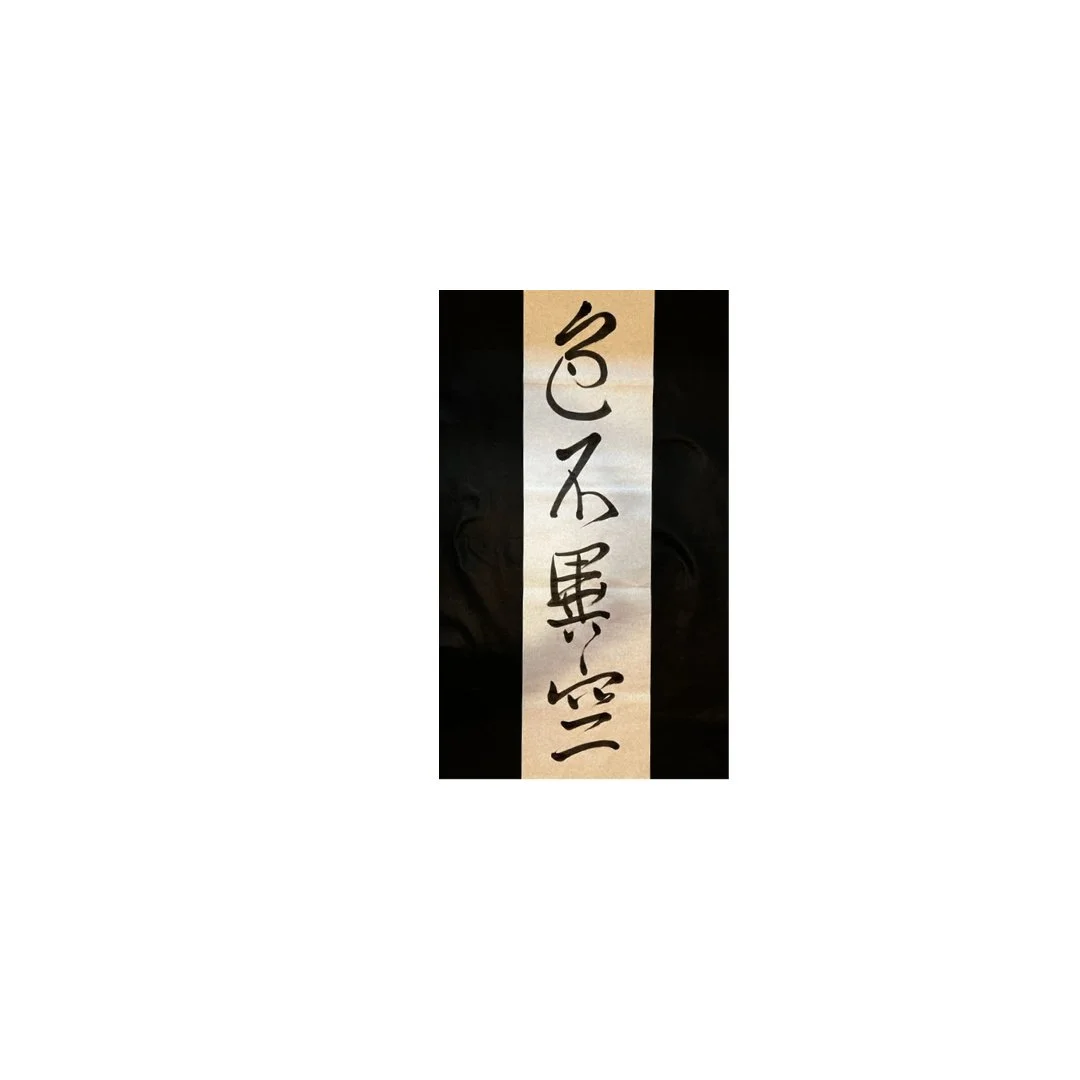
Form is Not Different From Interbeing by Anshi Zachary Smith
In The Heart of Understanding, the late Thich Nhat Hanh’s exemplary translation of and commentary on the Heart Sutra, there’s a chapter where he talks about Interbeing—his translation of the Sanskrit śūnatā, which is usually translated as Emptiness—with respect to the world of Karma. (1) In particular, he talks about the slums of Manila, and how it’s easy to look there and say, “Alas! So difficult, so crime-ridden, so full of suffering,” without recognizing the way in which our present state, past actions of which we’re, in some ways, beneficiaries, and our present and future actions are deeply interconnected with what happens in the slums of Manila. Acts of “moral hand-washing” are addressed and condemned in many religious and philosophical systems but, fundamentally, he says, we can’t wash our hands of the slums of Manila, and their denizens, because we and they “Inter-are”. More generally, the Heart Sutra makes clear that, because of the way the world comes into being moment by moment, completely interconnected in a causal web that is utterly beyond conception, we Inter-are with all being, whether we recognize it or not.
In the explanatory framework that underlies the Heart Sutra, circumstances conspire to create sensory contact, in the realm of form, between a being and the world as a result of some chain of causation that is ungraspable in its depth and complexity. This contact causes a reaction in the present moment and that reaction may, if it rises into the realm of perception, be retained as an “event”. The Sankskrit term for the faculty in which it’s retained is ālāya or “storehouse consciousness.” Events are stored in a structure that reflects the relational nature of the world that gave rise to them and are accessed in a way that’s fundamentally associative. When a future event happens, ālāya is searched with the question, “Hey, have we got anything that looks like this?” i.e. that in its presently embedded form, modified through the years through interactions with other events, kind of looks like this, “and if so, drag it out and see what we’re going to do about it”.
That’s how we’re all built from the ground up. We’re conditioned, first of all by our physiology, and second of all by our experience, and that experience has multiple layers. It has private, inner experience, experience of interactions with the “Things of the World” and of interactions with other beings at all levels of this deeply layered social structure that we live in. Some of our conditioning is cultural, some of it is political, some of it is familial, etc. It’s a rich and multilayered construct and it has everything to do with dictating our perceptions and actions.
It may be worthwhile to ask here, “Well, what’s wrong with that?” or to say, “Yes. We have a phrase for that and it’s, ‘learning from experience.’” Quite so. For each of us, our model for the world and for ourselves in it, is our best effort, given our unique position in and trajectory through the causal web, to understand and control the circumstances of our lives and to craft a future course of action that will be beneficial, mostly to ourselves, in that context. For example, if you’ve been raised in such a way that everyone told you, “When you see a large predator, immediately go get your gun and shoot it,” and if a whole society has been raised with that as their conditioning, then it’s not surprising that, quite recently, there weren’t all that many wolves, coyotes, bears and mountain lions in the state of California. Even though this might have seemed like a good idea at the time, perhaps because it made the world safer for people and their livestock, it turned out to be a huge mistake because our understanding of the “Web of Life”—aka Interbeing— was (and is) deeply imperfect. The removal and displacement of most large predators has had drastic ecological side-effects of which humans have gradually become, at least dimly, aware. It is a welcome sign of this deeper understanding, and of a more compassionate attitude in general towards non-human animals that, all of a sudden, it seems you can’t walk down the street here in San Francisco without bumping into a coyote. There are mountain lions living above Pacifica, just south of here, and all there is to warn people are hand-written signs that say, “Hey, look out for the mountain lion!”
Looked at historically, if everyone is going around primarily executing the patterned actions that are dictated by the agendas of their self construct and trying to balance cooperation and competition in a social framework such that each of us benefits as much as possible individually, that’s a recipe for disaster. It’s a recipe that’s been cooking for as long as people can remember and we’ve known this for as long as we have any record of what people knew about themselves and how they behaved. Looking at many of the earliest documents of human thought of which we're aware, it’s clear that all along we’ve been saying, “Wow, we’re really messing this up!” and nonetheless, we keep doing it.
After a while, this line of reasoning bumps into the argument of free will. If we’re all deeply conditioned in this way, are we responsible at all, and is this Mahayana Buddhist view simply a way of ducking out of responsibility for our actions?
The answer, obviously, is no. This is the crucial part of Thich Nhat Hanh's argument in The Heart of Understanding. Mahayana Buddhism simultaneously holds up the propositions that we’re conditioned beings who, because of our limited scope of understanding—our ignorance— fundamentally misunderstand the nature of the world and ourselves but also that, because of the pivotal opportunity presented by our ability to bring a particular continuous practice of awareness, inquiry and response to our experience, we have a modest but invaluable agency. If we train ourselves to do it, we’re in a position to examine the circumstances of the moment and, in a way that goes beyond habit and the dictates of our present conditioning, to frame alternate responses and allow them to register such that we favor actions and thoughts that are beneficial and agile, rather than habit-driven and subject primarily to the dictates and agendas of our self-construct.
Of all the many explanations that have been proposed for “the human condition” and proposals for how we could do better, what’s most unique and beautiful about the Buddhist explanation and solution is that it throws the onus back on each of us. We make a mess of things because we’re built this way, and nonetheless we have a choice about how to behave. In that context it’s fruitful to talk about evil action. When we take the Three Pure Precepts and vow to “avoid all evil” this has tremendous value as a benchmark and a reminder to ourselves and others.
Of course, Thich Nhat Hanh cautions us not to take these things at face value or to reify the categories “good” and “evil” because they, like everything else, Inter-are. As the Heart Sutra says, when looked at from the point of view of Interbeing, all of the categories raised in its underlying framework arise interdependently and are without an independent essence or nature. Nonetheless, from the point of view of everyday activity and conventional cognition, if there’s a word for the incredibly checkered history of human behavior over the course of the past ten thousand years, it might as well be, “evil.” As an antidote to evil and the suffering it causes, he wholeheartedly recommends this marvelous, continuous practice and the understanding it promotes.
Thich Nhat Hanh was a remarkable man. By all accounts, he brought keen intelligence, the mind of a scholar and an artist, and a boundless energy to the act of living his own particular human life—one that was marked by tremendous difficulty and that could easily have ended in defeat or disappointment. It’s inspiring to see the depth and breadth of his positive impact on the world. Nonetheless, it’s crucial to remember that this is not the point. Our vow enjoins each of us to practice, each in our own domain and with the capacities given to us, as wholeheartedly as possible in spite of the seeming impossibility of the task. This is nothing special and also the true activity of all Bodhisattvas.
By Anshi Zachary Smith
Thich Nhat Hanh, The Heart of Understanding:Commentaries on the Prajnparamita Sutra, Peter Levitt, ed., Parallax Press, c. 1988.